Coffee Origin
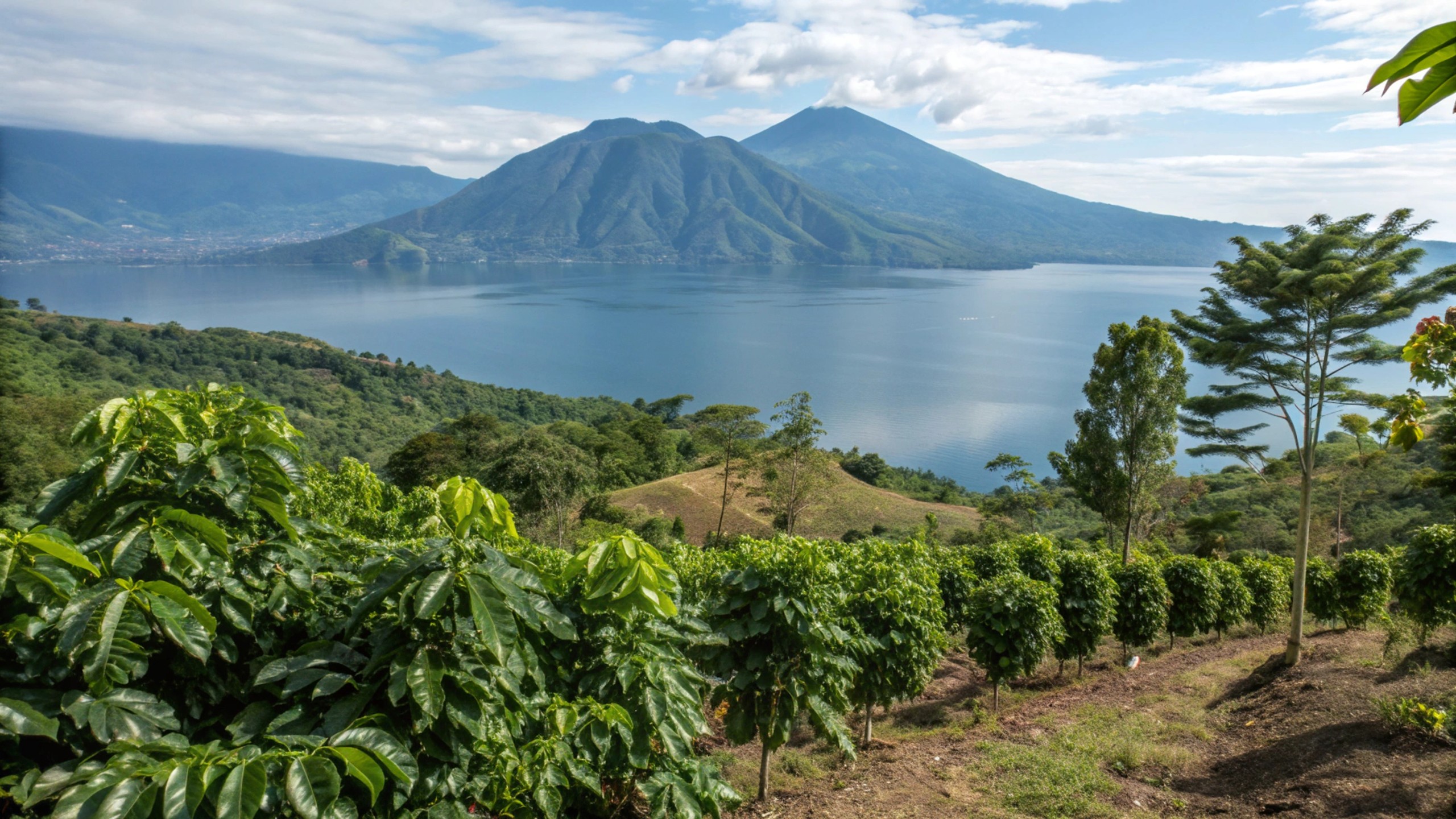
Lake Toba, Sumatra
- Region: Asia & Pacific
- Processing Method: Natural, Washed, Wet-Hulled
- Certification: Fair Trade, Organic
- Altitude: 900–1,500 MASL
- Farm: Lake Toba Smallholder Collective (various co-ops)
- Harvest season: June–December
- Cupping score: 87
Lake Toba, located in the province of North Sumatra, Indonesia, is a place of awe-inspiring beauty and home to some of the world’s most distinctive coffees. The volcanic soils surrounding the lake create a rich environment teeming with minerals and nutrients.
At altitudes ranging from 900 to 1,500 meters, smallholder farmers tend their coffee gardens beneath the shade of jungle and fruit trees. The landscape is dramatic, dotted with steep hills and traditional Batak villages.
Sumatra’s unique “wet-hulled” (Giling Basah) processing method defines the cup profile from Lake Toba. After depulping, the beans are partially dried and hulled while still moist, then further dried. This process imparts deep, earthy complexity, a syrupy mouthfeel, and pronounced flavors of cocoa, tobacco, and spices.
Harvesting happens throughout the year, but the peak season is between June and December. Farmers selectively hand-pick cherries and deliver them to local processors, many of whom are small family-run operations.
Fermentation, washing, and drying techniques vary from village to village, resulting in fascinating micro-lots with unique expressions of the land. The drying process is especially crucial, as the region’s humid climate presents a constant challenge.
Sustainability and community support projects are increasingly part of Lake Toba’s coffee story, with farmers joining cooperatives to improve quality, access resources, and secure better market prices.
Lake Toba coffees often receive organic and Fairtrade certification, reflecting the producers’ commitment to quality and the environment. The region supports a thriving biodiversity, preserving both the lake and the surrounding forests.
Exporters and cooperatives constantly refine their practices, seeking higher cupping scores and global recognition. The best lots are now regularly scoring 86–89 points, admired for their bold, rustic flavors and sweet finish.